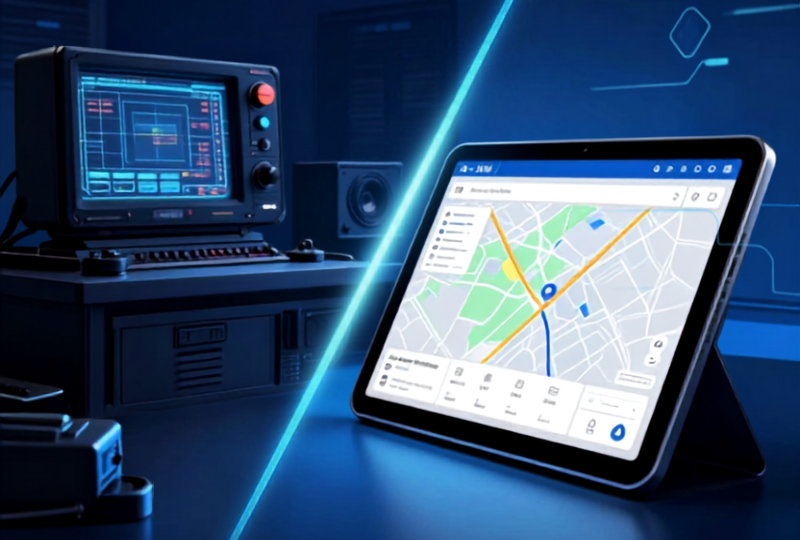

If your taxi firm has used the same dispatch provider for the last five, eight, or even ten years, you’re not alone ” and that’s exactly the problem. Many of the biggest names in UK taxi dispatch software haven’t meaningfully changed their core product in over a decade. The pricing has gone up. The technology hasn’t kept pace.
What “legacy” dispatch software actually looks like
Most long-standing providers built their systems in an era before smartphones were standard for drivers, before customers expected live tracking, and before cloud-based software was the norm. Many are still running on that same foundation today ” with a modern coat of paint layered on top.
Signs you’re dealing with a legacy system:
– Interfaces that feel clunky or outdated on mobile
– Features added rarely, and often just cosmetic
– Support that takes days to respond
– Pricing that increases at renewal without a clear explanation of what’s improved.
What modern dispatch software should offer
A system built in the last few years ” rather than patched together since the 2000s ” should give you:
– Real-time visibility of drivers and bookings from any device
– Regular, meaningful feature updates, not just design refreshes
– Transparent, fair pricing tied to the value you’re actually getting
– Support from people who understand dispatch operations, not a generic ticket queue
Why this gap persists in the industry
The honest answer: the biggest providers don’t need to innovate. Independent taxi firms have historically had few alternatives, so legacy providers can keep charging premium prices without reinvesting proportionally back into the product. That model works well for shareholders. It doesn’t work well for you.
What to do about it
If you haven’t reviewed your dispatch software in the last two or three years, it’s worth asking a simple question: is the price you’re paying today matched by genuine improvement in the product? If the answer is no, it may be time to look at what’s changed in the market since you last checked.
Independent firms built the UK taxi industry ” the software running it should keep pace with that, not lag a decade behind. If you want to see what a modern alternative looks like,